
The full standard behind a product
GOTS certificationWhat does it mean for a product?
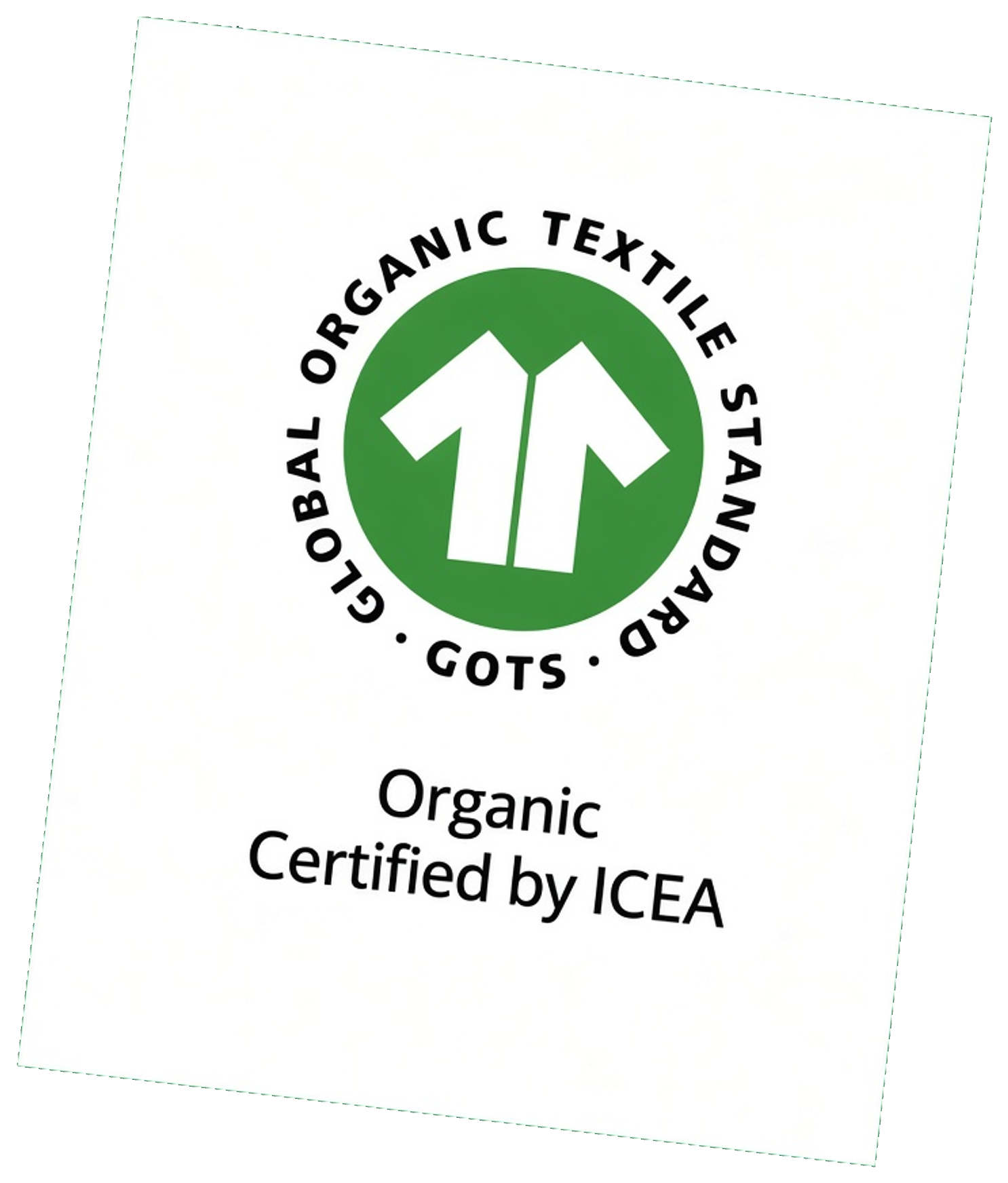
A GOTS label on a textile does not only mean organic fibres. GOTS is a whole-chain standard: raw materials, production, environmental and social criteria, and traceability.
There is more behind the label.
01
The journey starts with organic fibres
A GOTS product starts with certified organic fibres.
Those fibres are natural fibres from recognised organic farming. That farming limits synthetic pesticides and GMOs and protects soil, ecosystems and people.
The base is a raw material whose organic status was confirmed independently.
It all starts with the fibre.
02
From fibre to yarn, from yarn to cloth
Certifying the raw material is not enough. Yarn and cloth must meet GOTS rules too.
In spinning, weaving and knitting, certified material stays separate from conventional — traceability is kept.
The organic fibre stays traceable from origin to the finished textile.
Fibre
Yarn
Cloth
Controlled processing.
03
Environmental standards in production
Dyes, auxiliaries and chemicals in dyeing, washing and later steps fall under GOTS rules.
Ecological and toxicological limits apply. Banned chemicals must not be used.
Wastewater from wet processing has defined requirements too.
GOTS looks at the fibre and at how it is turned into cloth.
04
Workers’ rights and responsible production
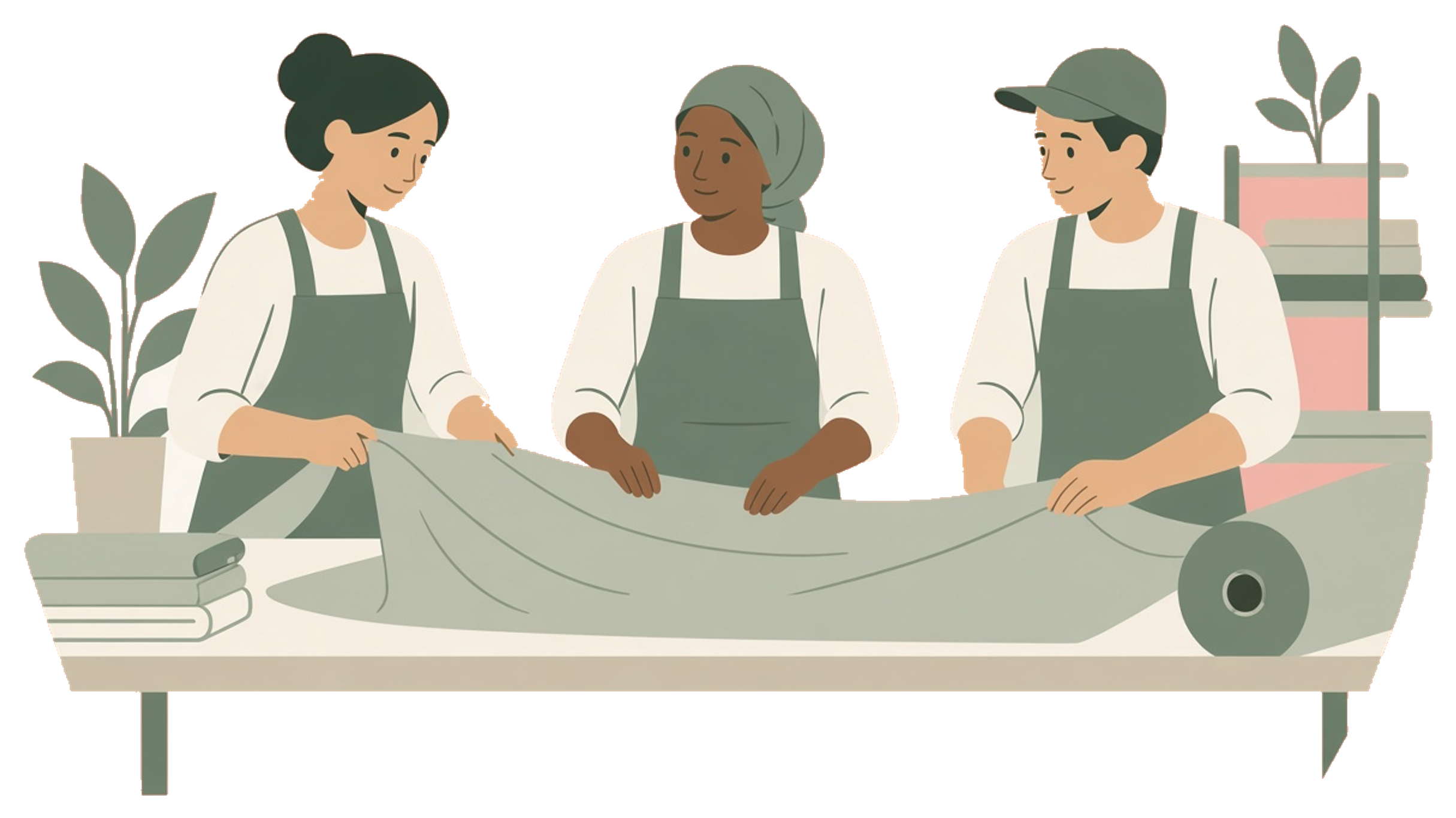
GOTS is not only environmental. Social criteria in production and trade must be met.
They rest on ILO standards and recognised labour and human-rights principles.
Health and safety, no child or forced labour, and equal conditions without discrimination are part of that.
Production with people at the centre.
05
Traceability in the supply chain
GOTS covers several stages of the textile chain.
From raw material through spinning, weaving, wet processing, cut-and-sew, packing and labelling to trade, certified goods must stay traceable.
The label on the finished piece is not only the last step — it stands for a documented chain.
 Raw fibre
 Spinning
 Weaving
 Wet process
 Making-up
 Labelling
06
Independent inspection and certification
Conformity is not based on company self-declarations alone.
Processors, makers and relevant traders are audited by independent bodies approved by GOTS.
That is how the standard is checked along the chain.
Independently inspected.
What sits behind the label
What does the GOTS label on a product tell us?
The label says more than “this contains organic fibre”.
It requires organic status, controlled processing, chemical and environmental rules, working conditions and traceability.
Independent inspection keeps ecological and social claims from being marketing only.
In short: from fibre to finished textile, traceable and independently certified against set criteria.
We attach proofs to quotes on request — not as a public download.
Browse the catalogue